
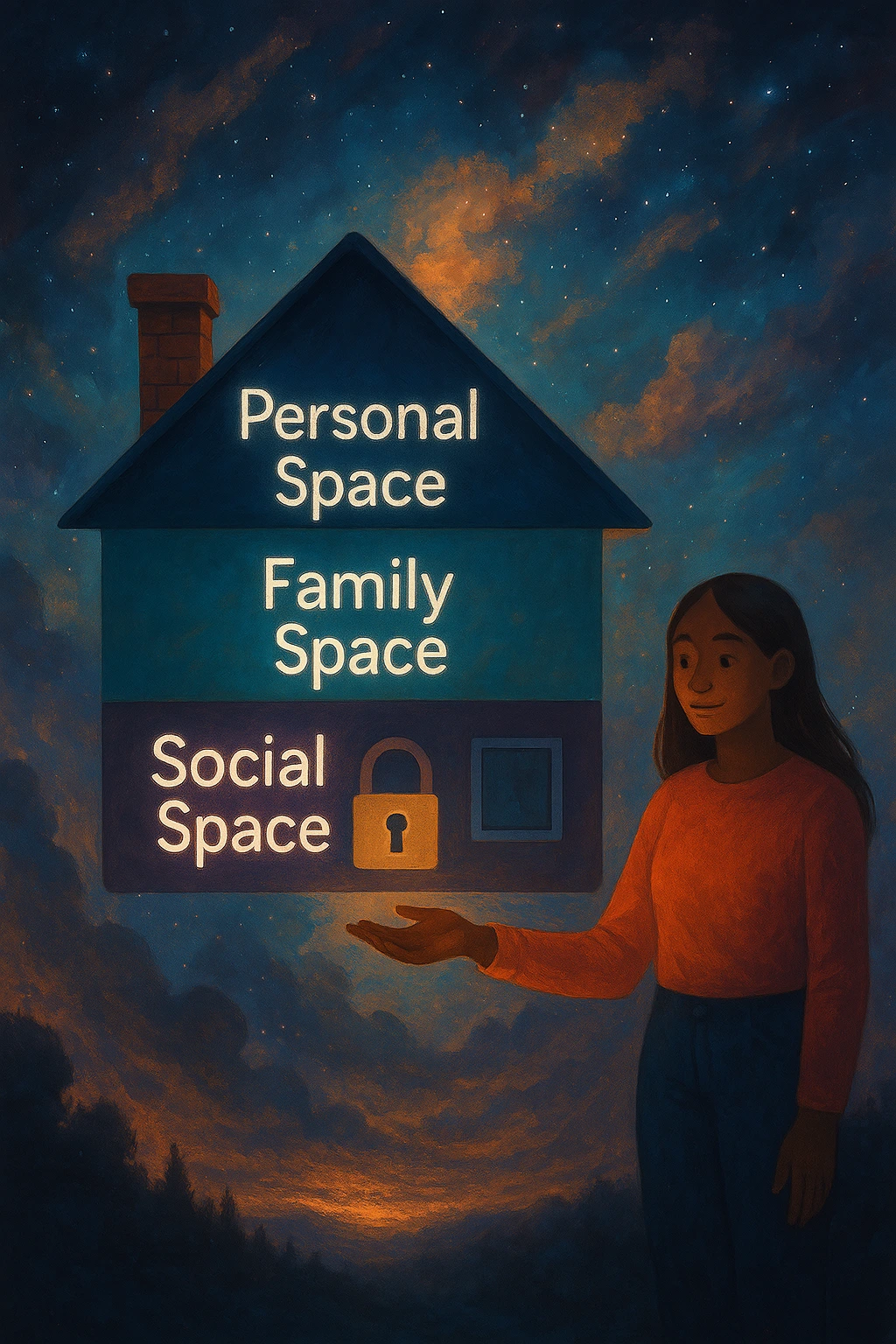

Control Your Space
Think about a house, the perimeter of it is called the boundary line. It establishes where your property starts and ends, you live within those lines and make your house perfect based on your preferences.
In your house, there’s a lot of space; social, family space and personal space. You may even have your own room, the parameters of your room are your personal boundary lines, very few people are allowed to into your room without knocking first. When you think of boundaries in that way, you start to understand how to set boundaries.
Establish your boundaries and benefits
- What do you want from it?
- Who do you want there?
- How do you want it to be?
- What do you get out of it?
Once you have established what the benefits of setting boundaries are, then you get to decide who you want in your life.
Look at your contact list, how many people do you speak to on a regular basis? If you haven’t spoken to them in more than three months, delete their number, they are of no benefit to you.
From your contact list, group them into family, friends, colleagues etc.
(Medical doctors are a must have, Mr D and Takealot don’t count unless you have an online shopping addiction)
You could have 3 columns and then write the heading and where they fit:
FAMILY | FRIENDS | COLLEAGUES |
Once you’ve filled in your columns, draw a column within each of the categories and put a tick or cross next to their name after you think about these questions…
Tick – I feel refreshed/revitalised after an interaction with this person
Cross – I feel frustrated/drained after an interaction with this person
You can now delete the crosses from your contact list, as there are people who add no value to your life, and whom you never need to interact with ever again. However, there are those miserable bosses and judgemental family and friends that arrange the gatherings and notifies you of funerals, no hope there, you are obliged to keep those numbers.
By the end of that exercise, you would have drastically shortened your contact list.
Next set of columns…
- Who would you call in case of an emergency?
- Who would you call when you had the best day of your life?
- Who would you call when you had the worst day of your life?
- Who would you call to help you dispose of the body?
- Who would you call when you need advice on how to dispose of the body?
Your list has now been narrowed down to a handful of people, even then, there are times when the conversations and interactions drain you, that’s okay, they’re in the house but they don’t have to be in your room full time.
You have now come to the point where you have a handful of people within your house, now you get to decide under what circumstances/conditions/instances are they allowed to knock and enter your room.
If they knock, what would you open the door for?
Establish your conditions of entry
For example, they are allowed to enter to find out how you are but not to bring their clothes into your room and ask you to fold them without helping you too. Don’t let anyone dump their problems on you and expect you to fix them without also doing the work too.
Now you have a house boundary, the visitors that come and go and you have a bedroom boundary, the family and friends that are with you all the time.
You have established CLEAR boundaries and identified who adds value to your life and who negatively affects your peace.
You can apply these principles to setting boundaries with anyone. You decide who you let in and who you deny access to. Your time and your peace are your most precious gifts. Your time is your currency, decide who you want to …
- Waste it on
- Spend it with
- Invest it in
- Steal it from
- Save it for
- Treasure it with
I wasted my time with boyfriends that gave nothing back, only misery that I turned into lessons to lessen the misery.
I spent my time with family and friends. I got memories and learnt a lot of lessons that friends and family are only with you for as long as they see value in you. Once you no longer hold any value in their lives, they forget about you and move on to more valuable people.
I invested my time in my immediate family, my studies and myself. I got a support system, an education that no one can steal from me, and I became a humble, relatable, quirky, weird person that I am proud to be.
You can waste your time on stupid things and stupid people.
You can spend your time with a social life and learn life experiences.
You can invest your time in building and maintaining strong, healthy relationships and habits and watch your investment grow.
Stealing, saving and treasuring time are yours to decide for yourself…
By establishing boundaries, you are prioritizing who and what gets your time.
Time is the only currency you use without knowing its balance: waste, spend, invest, steal, save, treasure it WISELY.